

Selective laser sintering (SLS) gives manufacturers a way to produce complex polymer parts without dedicated moulds or tooling. It can also suit applications where designs vary between products, or where companies need to make small batches without committing to traditional production tooling.
Examples from robotics, orthotics and automotive manufacturing show how TPM3D SLS systems are being used to address different production needs.
For an autonomous patrol vehicle project in Dubai, MicroPolis Robotics needed structural components that were lighter and practical to produce. A TPM3D S600DL was used to manufacture a large structural part using the material Precimid1172Pro GF30 BLK.
The reported weight of one component fell from 27 kg to 4 kg. This illustrates how redesigning a part for SLS can create opportunities to reduce mass while producing complex geometry without a dedicated tool.
The 3DPrint.com feature also reports a shorter delivery time for the component. TPM3D’s own article describes a different production-time comparison, so the specific timing figure should be confirmed before publication.
Spanish orthotics manufacturer Edser produces custom insoles, sandals and braces. Because each product can be shaped for an individual wearer, the company needed a workflow that could support personalisation while meeting delivery expectations.
Edser’s process begins with a foot scan using a LiDAR-equipped device. The scan data is processed, the design is adjusted with medical input, and the part is then printed and post-processed. TPM3D reports that a custom-fit insole can be delivered in as little as four days.
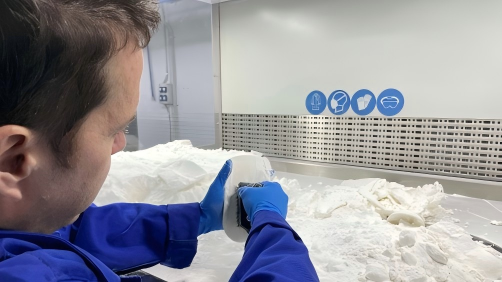
Edser uses the large-format TPM3D S600DL, with a 600 × 600 × 800 mm build volume, to produce multiple customised parts in a build. The system is paired with a powder-processing station to support depowdering, recovery and mixing.
For its orthotics, Edser uses TPM3D PP Pro polypropylene powder. TPM3D says the material can be reshaped with heat after printing, allowing comfort adjustments to be made. The manufacturer also reports that Edser’s SLS workflow has improved overall production efficiency by approximately 45%.
German additive manufacturing service provider cirp added a TPM3D S480 to expand its capacity for small-batch automotive components. The company evaluated production capability, material compatibility and operating efficiency as part of its selection process.
The S480 has a 480 × 480 × 600 mm build volume. Depending on part geometry and how parts are arranged, TPM3D reports that a build can produce approximately 18–20 kg of finished polymer parts.
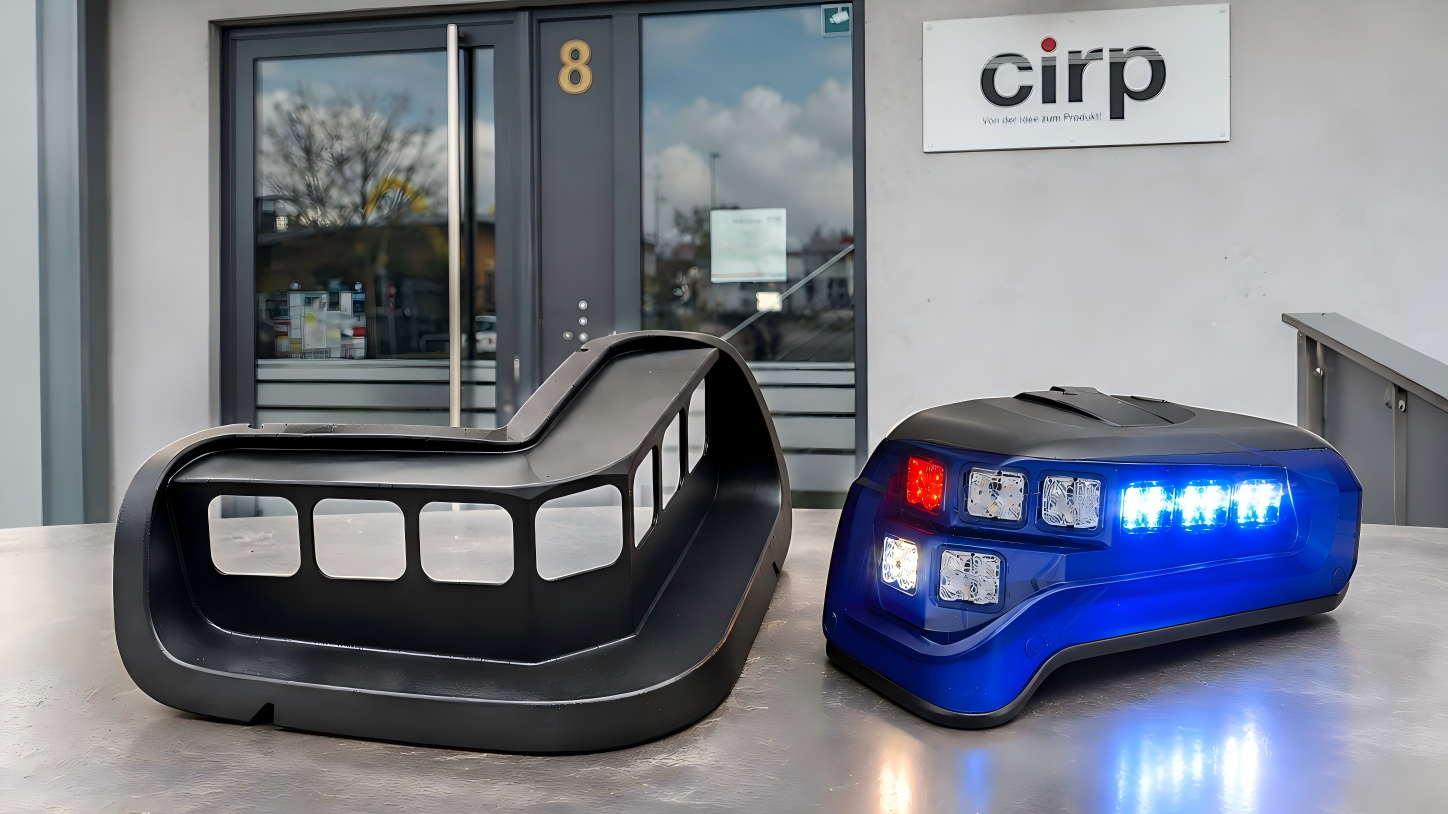
Reported applications include emergency vehicle warning-light housings, fuel-system sealing components and customised lighting parts. For PA11 production, the system uses temperature control and powder recoating to support stable processing. cirp also uses a powder-processing station to cool, clean and sieve powder, mix recycled and fresh material, and supply powder to the printer.
These examples show that production depends on more than the printer alone. Material selection, build preparation, powder handling and post-processing all contribute to the finished workflow.
For MicroPolis, the focus was a lighter structural vehicle part. For Edser, it was producing individualised orthotics through a digital workflow. For cirp, it was adding flexible capacity for functional automotive components and small production runs.